
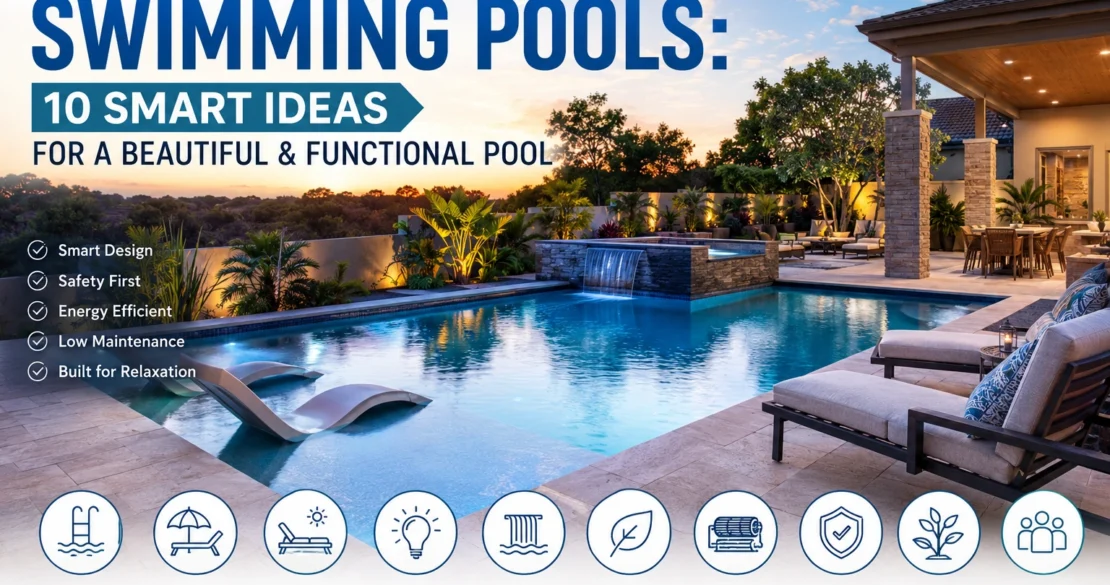
Suggestions for Swimming Pools: 10 Smart Ideas for a Beautiful & Functional Pool can help you turn an ordinary backyard into a relaxing, attractive, and practical outdoor space. The best pool design is not simply about making the water look beautiful. It should also consider your available space, lifestyle, maintenance needs, safety, energy use, and the overall design of your property.
Whether you are planning a new swimming pool or renovating an existing one, these 10 ideas can help you make better design decisions.
1. Choose a Pool Shape That Fits Your Space
The shape of your pool should work with your property rather than compete with it.
A rectangular pool is a practical choice for swimming, exercise, and modern homes. Freeform and curved pools can create a softer resort-style appearance, while compact plunge pools are useful when outdoor space is limited.
Before choosing a shape, consider:
- The size and layout of your garden
- How people will move around the pool
- Available space for seating and landscaping
- Whether you want the pool mainly for swimming or relaxation
- The architectural style of your home
A well-planned smaller pool can often look better than a large pool that leaves little usable outdoor space.
2. Add a Comfortable Poolside Area
One of the most useful suggestions for swimming pools is to design the surrounding area at the same time as the pool itself.
A pool should have enough deck space for people to enter, exit, sit, relax, and move around safely. Consider adding outdoor chairs, loungers, a shaded seating area, or a small dining space.
Choose poolside materials carefully. Surfaces should be suitable for wet conditions and comfortable enough for regular barefoot use. Good drainage is equally important because standing water can make the area slippery and encourage unwanted maintenance problems.
3. Create a Shallow Lounge or Sun Shelf
A shallow sun shelf can make a swimming pool much more versatile.
It provides a place where adults can sit in the water, children can enjoy a shallow area under appropriate supervision, or you can simply place loungers partially in the water.
For families and people who enjoy relaxing more than swimming laps, this feature can add considerable value without requiring a separate spa.
However, the shelf should be planned around the intended users and finished with appropriate slip-resistant materials.
4. Use Pool Lighting for Beauty and Safety
Good lighting can completely change the appearance of a pool after sunset.
Underwater LED lights can create a clean, modern appearance, while landscape lighting can highlight trees, pathways, walls, steps, and architectural features around the pool.
Think beyond the pool itself. Lighting the route between the house, pool, seating area, and outdoor kitchen can make the entire space more practical at night.
Electrical work around pools should always be planned and installed according to applicable local safety requirements by qualified professionals.
5. Add Water Features Carefully
Waterfalls, deck jets, fountains, bubblers, and spillways can give a pool a luxury-resort feel.
But more features do not automatically mean a better pool. Every additional feature can affect installation cost, equipment requirements, energy consumption, cleaning, and maintenance.
A simple feature can sometimes have more visual impact than several complicated additions. For example, a narrow waterfall integrated into a stone wall can become a strong focal point without overwhelming a minimalist pool design.
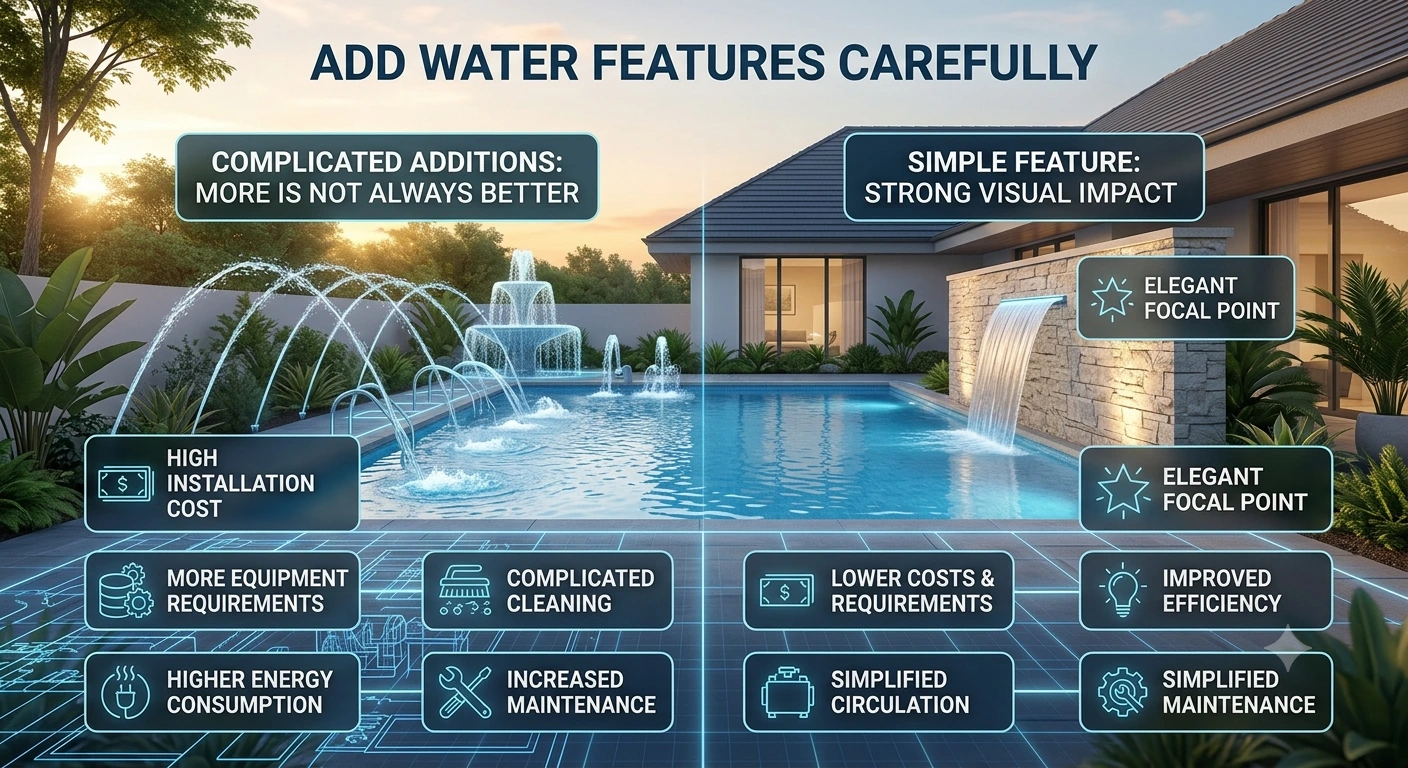
A well-placed water feature adds style and a relaxing atmosphere.
6. Make Energy Efficiency Part of the Design
A beautiful pool can become expensive to operate if the equipment is poorly selected.
Pump sizing, filtration, heating, lighting, and water evaporation all affect running costs. The U.S. Department of Energy notes that pool covers can substantially reduce evaporation and energy loss, while efficient pump choices can also improve performance.
When planning a pool, ask your contractor about:
- Efficient or variable-speed pumps
- Properly sized circulation equipment
- LED pool lighting
- Pool covers
- Solar heating where appropriate
- Energy-efficient heating options
- Automatic controls and timers
The important point is to design the complete system rather than choosing individual equipment pieces separately.
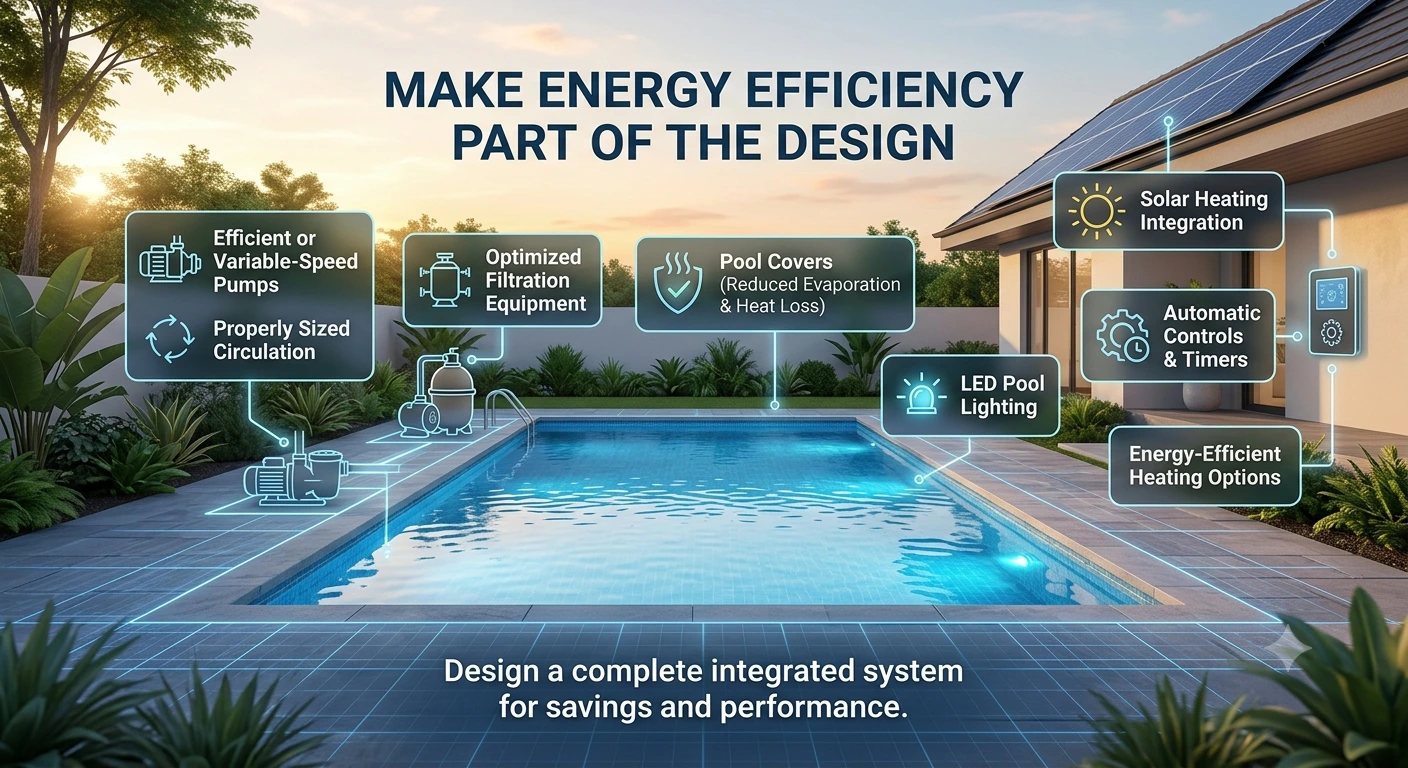
Smart pool features can help reduce energy use and maintenance costs.
7. Include a Pool Cover
A pool cover is one of the simplest additions that can provide practical benefits.
Evaporation is a major source of pool energy loss, particularly when a pool is heated. DOE-backed guidance indicates that properly used pool covers can significantly reduce energy requirements and water loss.
A cover can also help keep leaves and debris out of the water when the pool is not being used.
If children have access to the property, remember that a cover should not be treated as the only safety measure. Pool safety should use multiple layers of protection.
8. Plan Pool Safety From the Beginning
Safety should never be an afterthought.
The U.S. Consumer Product Safety Commission recommends layers of protection around residential pools, including barriers and appropriately designed self-closing, self-latching gates. Its current safety guidance also emphasizes preventing unsupervised access by young children.
Your pool plan should therefore consider:
- A suitable perimeter barrier
- Secure access gates
- Safe steps and entry points
- Appropriate lighting
- Slip-resistant surrounding surfaces
- Pool rescue equipment
- Safe circulation and drain design
- Direct adult supervision when children are swimming
Local building and safety requirements vary, so always check the regulations that apply to your location before construction.
9. Combine Landscaping With the Pool Design
Plants, paving, rocks, trees, and garden features can make the pool feel like a natural part of the property.
Instead of adding landscaping after construction, plan it alongside the pool.
For example, tropical plants can create a resort-style atmosphere, while clean paving and structured planting can complement a contemporary home. Use plants that suit your climate and avoid placing excessive leaves or debris-producing vegetation immediately beside the pool.
Also think about shade. A strategically positioned tree, pergola, umbrella, or covered seating area can make the pool more comfortable during hot weather.
10. Design the Pool Around How You Actually Use It
Perhaps the most important suggestion for swimming pools is to start with your lifestyle.
A pool designed for daily exercise will have different requirements from one intended mainly for entertaining guests.
| Pool purpose | Useful design ideas |
| Family use | Shallow area, safe entry, generous deck |
| Exercise | Long rectangular shape, clear swimming lane |
| Relaxation | Sun shelf, comfortable seating, water features |
| Entertainment | Large deck, lighting, outdoor kitchen |
| Small backyard | Compact pool, plunge design, vertical landscaping |
| Luxury home | Infinity edge, premium finishes, integrated features |
Think about how you expect to use the pool five or ten years from now, not only how you want it to look on opening day.
Common Swimming Pool Design Mistakes to Avoid
Even attractive pool projects can create problems when planning focuses only on appearance.
Making the pool too large
A larger pool requires more water, cleaning, equipment, and usable yard space. Bigger is not always better.
Ignoring maintenance access
Pool equipment needs servicing. Make sure pumps, filters, heaters, electrical equipment, and other systems remain accessible after landscaping and construction are completed.
Choosing materials only for appearance
A beautiful surface is not necessarily suitable for a wet environment. Consider durability, cleaning requirements, heat, slip resistance, and long-term maintenance.
Adding too many features
Waterfalls, fountains, spas, lighting, automation, and other features can quickly increase complexity. Choose features that genuinely improve the way you use the pool.
Treating safety as an optional extra
Pool safety should be included in the initial design. The CPSC specifically recommends multiple layers of protection rather than relying on a single safety measure.
How to Choose the Right Pool Design
Before approving your final swimming pool design, work through these five questions:
- How much space can I realistically use?
- Who will use the pool most often?
- How much time and money can I dedicate to maintenance?
- Which features will provide genuine value?
- What safety, drainage, electrical, and local building requirements apply?
Answering these questions early can prevent expensive changes later.
Conclusion
The best suggestions for swimming pools are not necessarily the most expensive ones. A successful pool combines attractive design with comfort, safety, efficient equipment, easy maintenance, and a layout that suits your lifestyle.
From choosing the right shape and adding a sun shelf to installing efficient equipment, practical lighting, landscaping, and safety features, each decision contributes to the finished result.
If you are planning a new swimming pool or upgrading an existing one, start with a professional design consultation. A well-planned pool can become more than a place to swim—it can become one of the most enjoyable and valuable parts of your outdoor living space.